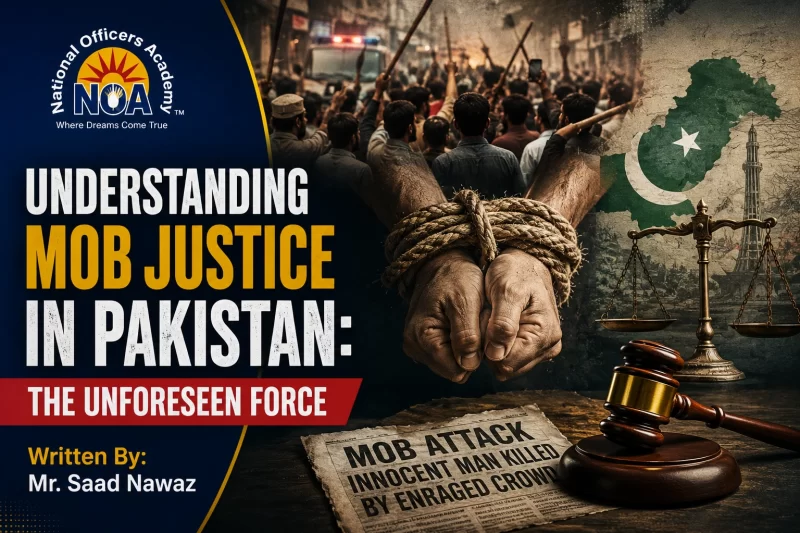
“A mob is not, as is so often said, mindless. A mob is single-minded.”
— Teju Cole
A mob is a crowd temporarily united by a single grievance or purpose. It usually forms when a group of people believes that it has been wronged and that its concerns are not being addressed properly.
Whether the grievance is genuine or based on misinformation, it creates a temporary bond among those involved. Once the purpose has been achieved or the crowd has been dispersed, the mob normally disbands.
The most dangerous feature of a mob is the absence of individual accountability. A mob does not have a single face. When violence is committed collectively, each participant may believe that responsibility will be shared or that the authorities will not identify and prosecute them individually.
This perception creates a sense of impunity. Individuals may convince themselves that they are not committing a moral or legal wrong because they are acting as part of a larger group.
Mob justice remains a serious problem in Pakistan. It challenges the authority of the state, weakens the rule of law, and allows allegations to replace evidence and due process.
Blasphemy accusations are among the most common triggers of mob violence in the country. Once an allegation is made, crowds may react emotionally without waiting for an investigation or considering whether the accusation is true.
The state has repeatedly attempted to defend its authority against such pressure. In the case of the assassination of Punjab Governor Salman Taseer, for example, the government enforced the court’s decision despite public demonstrations demanding a different outcome.
Mob mentality is a complex psychological and sociological phenomenon. Many people join mobs because the crowd makes them feel powerful, protected, and anonymous. It allows individuals to hide personal prejudice, fear, or aggression behind collective action.
When the will of a crowd is imposed through violence, the foundations of a law-abiding society begin to deteriorate. Justice must therefore be delivered through lawful institutions if Pakistan is to remain a functioning constitutional democracy.
History of Mob Justice in Pakistan
The Lahore Riots of 1953
One of the earliest major examples of mob violence in Pakistan occurred in Lahore in 1953.
Protesters demanded the removal of the foreign minister because of his religious identity. The government refused to accept the demand because it was unconstitutional.
The protests later turned into violent riots. A false rumour alleging the desecration of the Holy Quran by police personnel further inflamed the situation.
The allegation was not properly verified, yet it was enough to bring people together and trigger widespread violence across Lahore.
The situation eventually became so serious that the government called upon the Pakistan Army to restore order.
This incident became one of the first major examples of religiously motivated mob violence in the country’s history.
The Jaranwala Incident
On 16 August 2023, a disturbing outbreak of mob violence occurred in Jaranwala, Punjab.
A crowd attacked the local Christian community after accusations of the alleged desecration of the Holy Quran spread through the area.
Homes were looted, churches were attacked, and copies of the Bible were desecrated.
The incident was particularly alarming because Pakistan’s legal framework protects the religious sentiments and places of worship of all recognised religious communities, including Christian citizens.
The Jaranwala violence demonstrated how quickly an allegation can be used to target an entire minority community.
The Madyan Lynching
In June 2024, a tourist from Punjab was accused of blasphemy in the Madyan area of Swat.
After being confronted by a group of people, the accused was initially handed over to the police.
However, announcements were reportedly made through local loudspeakers, encouraging more people to gather outside the police station.
The police personnel present at the location were unable to control the growing crowd.
The mob eventually entered the police station, dragged the accused outside, and lynched him.
The incident showed how rumours, religious emotions, and weak crowd-control arrangements can combine to produce fatal consequences.
The Ichra Market Incident
Another incident occurred in Lahore’s Ichra Market when a woman visited the area wearing a dress from a Kuwaiti brand.
The dress contained Arabic calligraphy, which some people mistakenly believed included verses from the Holy Quran.
A crowd quickly surrounded the woman and her husband, issued threats, and raised aggressive slogans.
Unlike several other cases, the police responded promptly.
Assistant Superintendent of Police Shehrbano Naqvi arrived at the location, calmed the crowd, and safely escorted the woman and her husband away from the market.
The incident demonstrated the importance of rapid and professional police intervention. It also showed how easily misunderstanding and misinformation can place innocent lives at risk.
Understanding Mob Mentality as a Psychological and Sociological Phenomenon
French anthropologist, psychologist, and sociologist Gustave Le Bon examined crowd behaviour in his influential work, The Crowd: A Study of the Popular Mind.
According to Le Bon, crowds develop characteristics that differ from the behaviour of individuals acting independently.
The Hive-Mind Effect
A mob often functions like a hive mind. Its members share the same immediate objective and begin to think and act collectively.
This can lead to conformity, where individuals agree with the group without examining the facts or considering alternative viewpoints.
Independent judgment is gradually replaced by the shared emotions and assumptions of the crowd.
Anonymity and Loss of Responsibility
Every person in a mob becomes partly anonymous.
An individual normally has a personal identity, family relationships, professional responsibilities, and a reputation within society. These connections can discourage unlawful or immoral behaviour.
However, participation in a large crowd can weaken this sense of individual responsibility.
A person may believe that no one will identify them or hold them personally responsible for violence committed by hundreds of people.
The result is a loss of restraint and accountability.
Contagion of Actions and Ideas
Actions spread rapidly inside a mob.
If one person begins shouting, throwing objects, damaging property, or attacking someone, others may imitate the behaviour without considering its consequences.
Ideas spread in the same way. One person’s suspicion, prejudice, or malicious accusation can quickly become the accepted belief of the entire crowd.
This emotional and behavioural contagion is one of the main reasons mobs can become violent within a very short period.
Morality in a Mob
A mob often loses the moral standards that guide individuals in ordinary circumstances.
For the crowd, any action that helps achieve its objective may appear morally justified. At the same time, anyone attempting to stop the mob may be viewed as an enemy.
This is why crowds can begin to treat violence as a legitimate or even virtuous act.
In Pakistan, when false or unverified allegations of blasphemy spread through social media or local announcements, a crowd may immediately treat the accused as guilty.
Violence is then presented as punishment, even though no investigation has been completed and no court has examined the evidence.
This approach is dangerous because it allows emotions to replace both morality and justice.
Reasoning Within a Mob
Mobs rarely operate through careful reasoning. Their actions are normally driven by emotion, fear, anger, imagination, and group pressure.
When people accused of blasphemy are attacked, members of the crowd may begin to view the violence as a religious duty.
The act of lynching is wrongly transformed into a virtue, while the religious prohibition against extrajudicial punishment is ignored.
In this way, the crowd creates its own moral logic. It assumes that the accusation itself is proof and that violence is an acceptable form of justice.
Why Does a Mob Form?
American sociologist Randall Collins argues in Violence: A Micro-Sociological Theory that human beings are not naturally violent in all circumstances.
However, they may become irrational and aggressive when overwhelmed by emotion.
Collins distinguishes between reflective and reflexive actions.
- Reflective actions are calculated, deliberate, and based on reasoning.
- Reflexive actions result from immediate emotional reactions.
According to this perspective, violent behaviour is usually reflexive rather than carefully planned.
Every society has certain cultural sensitivities. In Pakistan, religious beliefs are among the most powerful and emotionally sensitive areas of public life.
When an allegation of blasphemy spreads, the first reaction is therefore often emotional rather than rational.
Communal Society and the Weakening of State Institutions
The ideas of sociologist Max Weber also help explain why mobs form in certain social settings.
According to Weber, traditional rural societies gradually become modern and urban through bureaucratisation.
Bureaucratisation is the process through which formal political, administrative, financial, and judicial institutions replace informal community arrangements.
For example, a formal court replaces a communal tribunal, while regulated banks replace informal financial systems.
Public and Private Spheres
In a traditional communal society, there is often little separation between private and public matters.
Family disputes, personal relationships, employment, and questions of honour may become concerns for the entire community.
In a modern legal system, justice is a public responsibility handled by the police, prosecution, and judiciary. Private citizens are not authorised to investigate, determine guilt, or impose punishment.
In a communal system, however, justice may be viewed as the responsibility of the entire community.
This explains why people may collectively boycott someone who has been punished by an informal council, even when they are not legally required to do so.
Community Loyalty and Mob Participation
Mob violence frequently occurs in areas where formal institutions are weak, access to education is limited, and communal loyalties remain stronger than loyalty to the state.
In such settings, joining a mob may not be viewed as a personal choice. It may instead be considered a demonstration of loyalty to one’s community, religious group, or local leadership.
This social pressure makes it difficult for individuals to question the crowd or refuse to participate.
The Connection Between Blasphemy Accusations and Mob Lynching
Several psychological and sociological factors contribute to mob violence after blasphemy accusations.
These include:
- Cultural and religious sensitivity
- Social pressure
- Fear of appearing indifferent
- Misinformation and rumours
- Personal rivalries
- Misuse of social media
- Weak understanding of legal procedures
Pakistan’s Constitution and laws provide formal rights and protections to religious minorities. However, sections of society remain highly emotional about religious matters.
In communities where there is little distinction between private belief and public conduct, individuals may feel pressured to display their religious commitment publicly.
Some may wrongly assume that they have a personal duty to protect the ideological or religious identity of the state through direct action.
This mindset becomes dangerous when combined with misinformation.
The Role of Social Media
Before the widespread use of the internet, a rumour would usually remain limited to the locality in which it originated.
Social media now allows false allegations, edited videos, incomplete information, and inflammatory messages to spread across cities and provinces within minutes.
Half-truths and fabricated accusations may also be used to settle personal disputes, gain political influence, or damage an opponent.
Once misinformation reaches an emotionally charged audience, a mob may begin forming before the police have had an opportunity to investigate.
Impatience With the Legal Process
Some people expect blasphemy cases to be decided immediately because they do not understand the requirements of a lawful investigation and trial.
Courts cannot deliver judgments without examining evidence, hearing witnesses, and allowing the accused a legal defence.
Similarly, the police must investigate allegations rather than immediately accepting them as true.
This process can frustrate those who demand instant punishment, but due process is essential for preventing false accusations and miscarriages of justice.
Blasphemy Laws and the Islamic Understanding of Justice
Several provisions of the Pakistan Penal Code address offences connected with religion, including the desecration of sacred texts, damage to places of worship, and derogatory remarks about religious personalities.
Supporters of these laws argue that the state has a constitutional responsibility to protect religious sanctity and maintain public order.
However, the existence of such laws does not give private citizens the authority to investigate allegations, determine guilt, or impose punishment.
Islam strongly emphasises justice, the sanctity of human life, the importance of evidence, and respect for lawful authority.
Police must be allowed to conduct independent investigations, while judges must examine cases without intimidation or external pressure.
Arbitrary violence weakens the state, violates due process, and creates the possibility that innocent people will be punished because of personal hostility or misinformation.
“If anyone kills a person, it would be as if he killed the whole of humanity.”
Islamic teachings also emphasise obedience to lawful authority and prohibit individuals from taking the law into their own hands.
The Asia Bibi Case
In 2009, a blasphemy case was registered against Asia Bibi in a village in Punjab.
Residents claimed that she had confessed to the allegation. Asia Bibi maintained that the alleged confession had been forced from her outside a court of law.
Large demonstrations were held across the country demanding her execution.
However, the state continued to follow the judicial process rather than deciding the case according to public pressure.
During the Supreme Court proceedings, the judges examined inconsistencies in the evidence and testimony.
Chief Justice Saqib Nisar noted that an extrajudicial confession did not carry the same legal value as a voluntary statement recorded through a lawful process.
Justice Asif Saeed Khosa also highlighted that the court had not initially been informed about an earlier dispute between the accused and her accusers.
Questions were also raised about conflicting accounts regarding the location and number of people who allegedly witnessed the confession.
The case demonstrated why serious accusations must be evaluated through evidence rather than public emotion.
Justice is a central Islamic obligation. It cannot be adjusted to satisfy the demands of an angry crowd.
Solutions for Ending Mob Justice in Pakistan
Ending mob violence will require cooperation among the government, police, judiciary, religious scholars, educational institutions, media organisations, and local communities.
The central objective must be to strengthen the authority of the state and prevent crowds from replacing courts and law-enforcement agencies.
Establish and Strengthen Anti-Riot Police Units
The police are the first line of defence against a violent mob.
Pakistan needs specialised anti-riot units trained to control and disperse dangerous crowds without unnecessary loss of life.
Provincial governments should provide these units with:
- Protective equipment
- Water cannons
- Tear gas
- Non-lethal crowd-control tools
- Communication equipment
- Rapid-response vehicles
- Training in negotiation and de-escalation
Specialised units must be capable of responding immediately before a crowd can attack an accused person, damage property, or overwhelm a police station.
Involve Religious Scholars
Once a mob has been dispersed, its claim to religious or moral legitimacy must be challenged.
Religious scholars can play an important role by explaining that accusations must be investigated and that punishment can only be imposed by the state.
After the Madyan incident, Jamia Binoria Aalamia issued a strong condemnation of mob violence.
Mufti Dr Nauman Naeem criticised those who challenged the authority of the state and stressed that legal proceedings were the only acceptable solution.
He also warned that accusations of blasphemy are sometimes made because of personal hostility.
Chairman of the Council of Islamic Ideology Dr Raghib Naeemi has similarly stated that mob justice violates Islamic principles.
Following the Jaranwala incident, senior religious scholars encouraged mosque imams to discuss the rights and protection of minorities during Friday sermons.
Prosecute Those Who Incite and Participate in Violence
Those who spread false allegations, incite crowds, damage property, or participate in lynching must face effective legal consequences.
Strict prosecution is necessary to create deterrence and end the perception that individuals can disappear into a crowd without being identified.
Technology such as mobile phone records, surveillance footage, social media evidence, and facial recognition can help investigators identify participants and organisers.
Dr Raghib Naeemi has called for the establishment of special courts to try cases involving mob violence and lynching.
Pakistan has previously used specialised courts for terrorism-related offences. A similar focused legal mechanism could help ensure the timely prosecution of mob violence cases while maintaining due process.
Promote Education and Critical Thinking
Long-term change requires education.
Pakistan’s literacy rate has improved significantly over the decades, but education must also teach people how to evaluate information, understand the law, and respect the rights of others.
Curricula should give greater attention to:
- Civic education
- Critical thinking
- Digital literacy
- Religious tolerance
- Constitutional rights
- The role of police and courts
- Responsible use of social media
Civic education can build trust in state institutions and explain why justice must be delivered through lawful procedures.
Critical thinking helps people question rumours, recognise manipulated content, and avoid reacting to unverified accusations.
Control Misinformation Without Restricting Legitimate Speech
Authorities and technology companies must respond quickly when online content creates an immediate risk of violence.
False allegations, calls for lynching, and the disclosure of an accused person’s location can produce deadly consequences.
At the same time, measures against misinformation must be transparent and should not be used to silence legitimate criticism or journalism.
Protect the Accused and Vulnerable Communities
Police must develop clear emergency procedures for protecting individuals accused by a crowd.
These procedures should include secure transportation, relocation to protected facilities, rapid reinforcement of police stations, and protection for the accused person’s family.
Minority communities and places of worship should also receive immediate security when inflammatory rumours begin circulating.
Conclusion
A society loses its credibility when crowds are allowed to decide the fate of an accused person without evidence, investigation, or trial.
The state must protect its authority and enforce the law to keep society peaceful and united.
Mobs are usually driven by misplaced anger, misinformation, social pressure, and emotional reactions. They do not rely on logical reasoning and frequently resort to violence.
From the Lahore riots of 1953 to the incidents in Jaranwala, Madyan, and Ichra, Pakistan’s history demonstrates how quickly allegations can create disorder.
Thinkers such as Gustave Le Bon explain how anonymity and collective behaviour reduce individual responsibility. Randall Collins highlights how emotional or reflexive action can replace careful reasoning.
Communal thinking, weak institutions, limited education, and inadequate urban development can further encourage group pressure and mob behaviour.
Pakistan already has laws and institutions for dealing with religious offences. Private individuals therefore have no justification for replacing the police, prosecution, and judiciary.
Pakistan’s identity as an Islamic republic also provides a strong moral basis for opposing mob justice because Islam condemns injustice, requires evidence, and prohibits extrajudicial punishment by private citizens.
Ending mob violence requires every stakeholder to fulfil their responsibilities. Police must protect lives, courts must deliver timely justice, religious scholars must reject violent interpretations, and educational institutions must promote critical thinking.
The fundamental question is whether society will allow fear and violence to replace law and justice.
“At his best, man is the noblest of all animals; separated from law and justice, he is the worst.”
— Aristotle