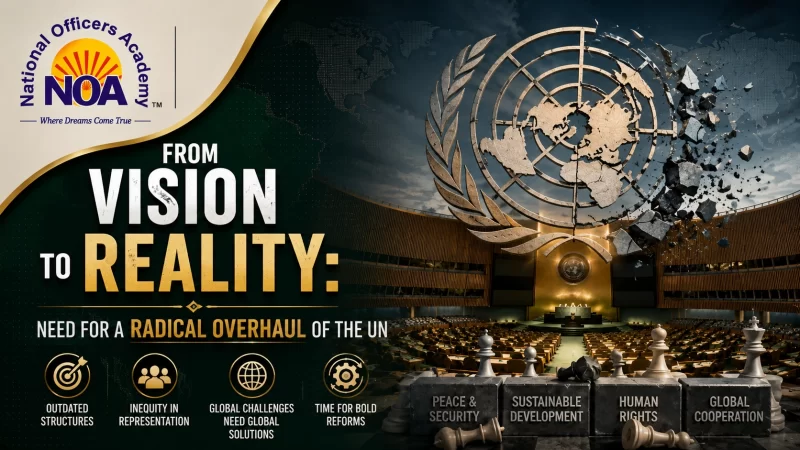
The United Nations was created in the aftermath of World War II to maintain international peace, promote cooperation and prevent another catastrophic global conflict. Yet the international system of the 21st century is fundamentally different from that of 1945. Globalization, digitalization, climate change, demographic pressures and changing centres of economic and technological power have raised serious questions about whether the UN’s existing institutional architecture remains sufficiently representative and effective.
The article examines major weaknesses of the UN through historical and contemporary cases, including the 1994 Rwanda genocide, the unresolved Palestine and Kashmir disputes, the Yemen crisis and the Iraq War. These cases highlight concerns surrounding Security Council paralysis, selective enforcement, great-power influence, weak implementation mechanisms and the controversial veto powers enjoyed by the P5.
It subsequently explores proposals for reform, including broader geographical representation in the Security Council, the Uniting for Consensus (Coffee Club) approach, expansion of Security Council membership, reconsideration of the veto system, stronger utilization of Article 99 of the UN Charter, and an enhanced decision-making role for the General Assembly. The central argument is that the UN must adapt its structures to contemporary geopolitical realities if it is to preserve its authority, legitimacy and effectiveness.