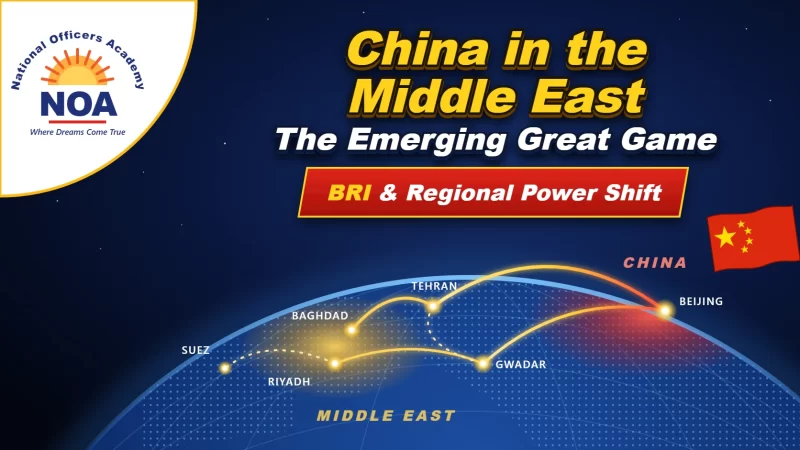
China’s expanding economic presence is adding a new dimension to the Middle East’s long-running power competition. This article examines the Saudi-Iran rivalry, strategic importance of Gulf energy and trade routes, China’s growing investments under the Belt and Road Initiative, the relative US pullback, and Pakistan’s potential role as a gateway connecting China with the energy-rich...Read More
The global order is gradually moving away from post-Cold War unipolarity as China and Russia gain influence, alternative institutions emerge, the Indo-Pacific becomes more contested and economic power becomes increasingly dispersed. This article examines the decline of US hegemony, the rise of multiple power centres, BRI-B3W competition, nationalism, slowbalization and Pakistan’s place in an emerging...Read More
AUKUS marks a major shift in Indo-Pacific geopolitics by deepening defence cooperation among Australia, the United Kingdom and the United States. This article examines the pact’s strategic significance, nuclear-powered submarines, China’s response, France’s anger, implications for the EU, Australia-China relations, Five Eyes and the wider balance of power in Asia. Pasted text(20261103-114940)Read More
Russia has transformed oil, natural gas, pipelines and energy exports into powerful instruments of foreign policy. This article examines Moscow’s vast energy resources, Gazprom and other state-linked companies, pipeline diplomacy, ruble payment demands, Europe’s dependence on Russian gas, sanctions and the wider shift from ideological influence to the weaponization of energy.Read More
Sri Lanka’s economic collapse rapidly transformed into a political crisis marked by inflation, fuel shortages, depleted foreign-exchange reserves, debt distress and mass protests in Colombo. This article examines the major causes of the Sri Lankan crisis, the fall of the Rajapaksa political establishment, similarities with Pakistan’s economic vulnerabilities and key lessons for Islamabad.Read More
The Taiwan Strait has emerged as one of the most sensitive flashpoints in US-China relations. This article examines Taiwan’s disputed political status, Beijing’s One-China principle, the 1992 Consensus, Taiwan’s international position, Washington’s strategic ambiguity, growing US-Taiwan ties and the risk of military confrontation across the Strait.Read More
The Russia-Ukraine war has become a major geopolitical rupture, reshaping NATO-Russia relations, accelerating great-power competition, disrupting energy and food markets, and intensifying inflation worldwide. This article examines the historical context of the conflict, its strategic and economic consequences, and its implications for Pakistan’s foreign, energy and economic security.Read More
Afghanistan’s political future has direct implications for the security, connectivity and economic stability of South Asia. This article examines the Taliban’s return to power, Afghanistan’s humanitarian and security crises, regional connectivity, terrorism, narcotics, bilateral relations and Pakistan’s role in promoting stability.Read More
The US-led War on Terror began after the September 11 attacks with the objectives of defeating transnational terrorist organisations, denying them safe havens and protecting the United States. This article examines why the campaign in Afghanistan ultimately failed, focusing on strategic confusion, overreliance on military force, weak state-building, declining public support, flawed regional policies and...Read More
Hybrid warfare combines military and non-military tools such as cyber attacks, propaganda, proxies, economic pressure, terrorism, information operations and diplomatic coercion. This article examines its relevance to Pakistan, the vulnerabilities it exploits, its political, economic and social implications, and Pakistan’s response to this evolving security challenge.Read More





Recent Comments