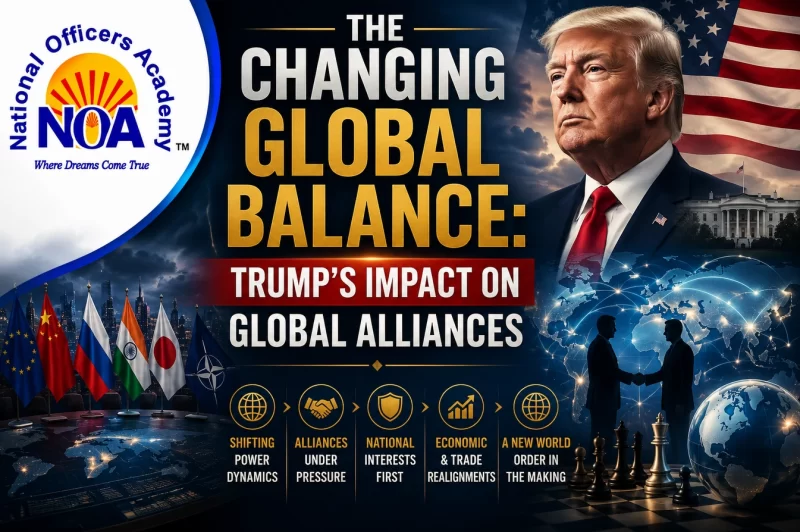
The Changing Global Balance
Trump’s Impact on Global Alliances
Introduction: A Shift in U.S. Foreign Policy
U.S. foreign policy has undergone a significant transformation since Donald Trump assumed the presidency for his second term.
His administration’s approach to the ongoing Russia-Ukraine conflict and its relations with key global allies have sparked intense debate.
These shifts have the potential to alter the global power balance in profound ways.
Central to this transformation are issues such as NATO’s role, European security concerns, and the dynamics of the Russia-Ukraine war.
As the United States revises its commitments, the effects extend beyond Europe and into Asia, reshaping global alliances and strategic partnerships.
Recent developments have left Ukrainians feeling betrayed, U.S. allies deeply concerned, and some Republican senators particularly frustrated.
Under Trump, the United States seems to be pursuing a diplomatic solution that largely aligns with Russian President Vladimir Putin’s demands.
Even before formal negotiations have begun, Trump has made several concessions, including dismissing the possibility of Ukraine joining NATO, ruling out U.S. troop deployments in Ukraine, and accepting pre-2014 borders as unattainable.
These changes represent a significant departure from previous U.S. policies.
Trump’s second term has fundamentally shifted Washington’s position on the Russia-Ukraine conflict, even accusing Ukraine of being the instigator of the war.
Putin’s Success and Western Miscalculations
The West, under the leadership of President Joe Biden, initially rallied behind Ukraine, hoping to weaken Russia through sanctions and military aid.
The assumption was that Russia’s economy would collapse, NATO would contain Russian advances, and Putin would be isolated.
However, these assumptions turned out to be misguided.
Putin’s success in the conflict can be attributed to three major strategies.
First, his use of nuclear rhetoric has effectively deterred direct Western military intervention, eliminating any chances of a decisive military victory for Ukraine.
Second, by pivoting to the East, Putin has stabilized Russia’s economy.
He has sold oil to India and China, marketed military weapons to the Global South, and strengthened Russia’s presence in international organizations such as BRICS.
Surprisingly, Russia’s economy has outperformed expectations, with a projected 4% GDP growth, while G7 countries are expected to grow at just 1.7%.
Third, Putin has expanded Russia’s diplomatic ties outside the West, forging stronger relationships with China, India, North Korea, and various African nations.
Instead of rushing to capture Kyiv, Putin has played the long game with strategic patience and calculation.
He has carefully considered whether it would be more beneficial for Russia to have a neutral Ukraine rather than one aligned with NATO.
His actions have shown that he is more committed to this goal than the West is to countering him.
With Trump now engaging in negotiations, Putin finds himself in a stronger position, with the ability to extract further concessions, prolong peace talks, or even expand Russia’s territorial control.
A Peace Deal: Russia’s Diplomatic Victory
Trump views diplomacy through a transactional lens.
For him, a potential peace deal with Russia could be seen as a territorial negotiation, offering land to Russia in exchange for stability.
However, for Putin, this war is not only about gaining territory. It is about undermining Ukraine’s sovereignty.
Putin sees Ukraine’s independence as a direct threat to Russian security.
One of the main reasons Russia invaded Ukraine was NATO’s eastward expansion, which Moscow perceived as an existential security threat.
Despite the West’s attempts to isolate Russia, Moscow has managed to secure a diplomatic victory.
Trump’s long-promised strategy to end the war involves enticing Russia to the negotiating table with incentives.
Recently, Russian officials sat down with U.S. Secretary of State Marco Rubio in Saudi Arabia, a development that many view as a win for Moscow.
Putin is seeking a settlement on his terms, which include formal recognition of Ukrainian territory seized by Russian forces.
Moscow also hopes for sanctions relief, as prolonged economic hardship could trigger domestic unrest, making a peace settlement even more critical for the Kremlin.
Ukraine: A Fight for Sovereignty Amid Uncertain Support
NATO has long pushed for Ukraine’s membership, seeing it as a critical part of the alliance’s security framework.
However, Trump’s administration has complicated this vision.
European leaders, including U.K. Prime Minister Keir Starmer, insist that Ukraine is on an “irreversible path” to NATO membership.
For Ukraine, joining NATO is seen as the only way to ensure its security, particularly after Russia’s invasion.
Yet, these security guarantees are now in doubt, especially after U.S. Defense Secretary Lloyd Austin downplayed Ukraine’s chances of joining the alliance.
In addition, Trump is pressuring NATO allies to increase defence spending from 2% to 5% of their GDP.
This proposal has left NATO members uncertain about their long-term strategy.
Some analysts believe that European NATO members never intended to defeat Russia outright but instead sought to engage Putin in a prolonged conflict.
While the war has continued for three years, it is clear that Ukraine, as a sovereign state, has the right to make its own decisions.
In geopolitics, absolute victory is rare, but Putin has maximized his gains while the West continues to struggle to mitigate its losses.
NATO’s Role and the Struggle for Relevance
NATO’s position on Ukraine’s membership remains complex.
The alliance has long advocated for Ukraine to join, but Trump’s stance complicates this objective.
As NATO faces the prospect of losing U.S. support, its future role and commitments are uncertain.
The situation has prompted European leaders to question NATO’s relevance and its ability to counter Russian aggression without strong U.S. backing.
Trump’s decision to withhold support for Ukraine’s NATO membership leaves European leaders, particularly in Eastern Europe, with difficult choices.
Countries such as Poland and the Baltic states fear that a peace deal favouring Russia could give Moscow time to regroup and launch further aggression.
At the same time, European countries such as Germany, France, and the United Kingdom have publicly criticized Trump’s approach.
They emphasize that any peace settlement must involve Europe and protect European interests.
Europe’s Dilemma: A Self-Reliant Defence Strategy?
Europe is now confronted with a new reality.
Trump’s policies have forced European nations to reconsider their dependence on U.S. security guarantees.
The proposed peace plan suggests that Ukraine must abandon its aspirations of joining the European Union and NATO, leaving Europe to defend its interests without U.S. support.
This shift has significant implications for European security.
The long-standing assumption that the United States would always provide a security umbrella is being questioned.
This is especially true if Trump moves forward with his plan to reduce U.S. involvement in the region.
Countries such as Germany, France, and the United Kingdom are now considering whether they can develop an independent defence strategy without relying on Washington’s backing.
Eastern European nations, in particular, fear that any peace deal favouring Russia could give Putin the space to plan future aggressive actions.
However, with Trump in power, Europe may also find an opportunity to influence U.S. policy.
If European leaders stand firm in supporting Ukraine’s sovereignty, they may be able to secure a deal more favourable to their interests.
The War’s Expansion into Asia: A Global Ripple Effect
The Russia-Ukraine war has begun to have global consequences beyond Europe.
China’s alignment with Russia, North Korea’s military support, and South Korea’s increased involvement have all demonstrated the war’s broader impact on Asia.
The Biden administration initially sought to connect European and Asian security strategies, encouraging cooperation between Washington’s allies across both regions.
This led to stronger ties between NATO and countries such as Australia, Japan, New Zealand, and South Korea.
However, as Trump disengages from the Ukraine conflict, Asia-Pacific allies face a more complex security environment.
Trump has even expressed interest in a trilateral summit with Russian President Vladimir Putin and Chinese President Xi Jinping.
This signals his willingness to include China in resolving the Ukraine issue.
Meanwhile, Europe is increasingly considering closer ties with China as it seeks to mitigate the fallout from U.S. withdrawal.
A New Power Balance: Shaping a New Global Order
The proposed peace deal between Russia and Ukraine signals a potential shift toward a new global order under the leadership of Trump and Putin.
This development mirrors the great power politics of the 1945 Yalta Conference, where major powers made decisions about the fate of smaller nations.
The United States no longer appears to hold unilateral dominance in shaping global affairs.
Both Trump and Putin seem to promote a world where powerful leaders dictate terms, sidelining smaller countries like Ukraine and even European allies.
Trump’s approach to the Ukraine war raises larger questions about his strategic objectives.
He may view the conflict as leverage to secure economic, military, and geopolitical concessions from Europe and Ukraine.
This strategy is already evident in recent U.S.-Ukraine negotiations over natural resources.
At the same time, Trump’s outreach to Putin could be an effort to weaken the Russia-China alliance.
However, granting territorial concessions to Russia may strengthen Moscow’s negotiating position and further diminish U.S. global influence.
Conclusion: A Risky Gamble for U.S. Global Leadership
The future of U.S. relations with its allies and its role in the Ukraine war remain uncertain under Trump’s leadership.
His actions suggest a willingness to make significant concessions to Russia, potentially undermining the Western consensus on Ukraine’s sovereignty.
A peace settlement on Russian terms could embolden Putin and lead to further territorial expansion.
Europe is now facing a crucial test: can it develop an independent security strategy without U.S. backing?
Meanwhile, Asian allies must reassess their reliance on Washington.
While Trump’s strategy aims to rebalance global power, it risks diminishing U.S. influence and credibility.
The promises of peace through appeasement are fragile.
Without credible security guarantees, any peace agreement could be short-lived, leaving Europe vulnerable in the long run.
The world will be watching closely to see whether Trump’s gamble reshapes global alliances or leads to a weakened U.S. presence on the world stage.