Pakistan’s recurring floods, cloudbursts, glacial hazards and extreme monsoon rainfall increasingly reflect both climate intensification and governance shortcomings. This article examines the 2025 floods, cloudburst disasters, climate-budget tagging, infrastructure failures and international best practices such as Copenhagen’s cloudburst plan and the Netherlands’ Room for the River strategy.Read More
Pakistan faces growing climate threats including smog, erratic rainfall, glacial melting, heatwaves, floods, wildfires, agricultural losses and water stress. This article examines the major climate risks facing Pakistan and reviews national responses such as renewable energy projects, plantation drives, electric vehicle policy and the Ecosystem Restoration FundRead More
Climate change has emerged as a serious threat to Pakistan through extreme heat, floods, glacial melt, water scarcity and agricultural disruption. The article critically examines Pakistan’s climate vulnerability, national initiatives such as the National Climate Change Policy and Ten Billion Tree Tsunami, and its diplomatic role at COP26 and COP27.Read More
Pakistan’s 2022 floods exposed the country’s deep climate vulnerability and serious gaps in disaster preparedness, urban planning, institutional coordination and financing. This article examines the scale of the disaster, Pakistan’s climate risks, shortcomings in national response mechanisms and a comprehensive framework for strengthening resilience.Read More
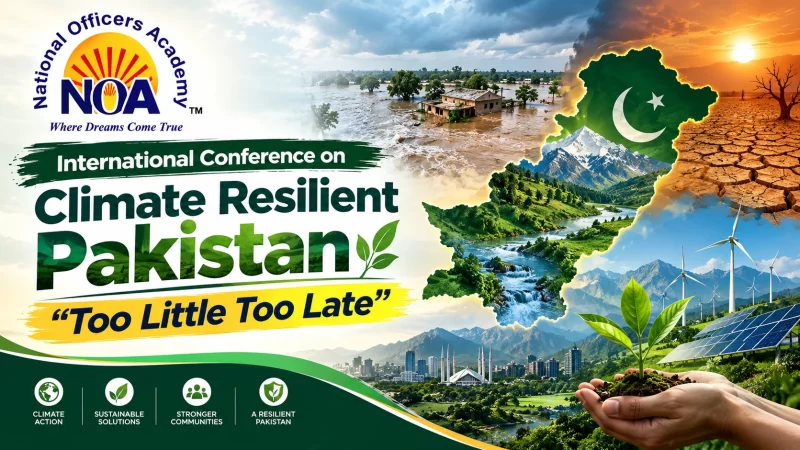
The International Conference on Climate Resilient Pakistan, held in Geneva on 9 January 2023, focused on rebuilding after the devastating 2022 floods, launching Pakistan’s Resilient Recovery, Rehabilitation and Reconstruction Framework (4RF), and mobilising international financial support for climate-resilient recovery. Official assessments placed flood damages above $14.9 billion, economic losses around $15.2 billion, and resilient reconstruction...Read More



Recent Comments