Climate change has emerged as a serious threat to Pakistan through extreme heat, floods, glacial melt, water scarcity and agricultural disruption. The article critically examines Pakistan’s climate vulnerability, national initiatives such as the National Climate Change Policy and Ten Billion Tree Tsunami, and its diplomatic role at COP26 and COP27.Read More
Pakistan’s 2022 floods exposed the country’s deep climate vulnerability and serious gaps in disaster preparedness, urban planning, institutional coordination and financing. This article examines the scale of the disaster, Pakistan’s climate risks, shortcomings in national response mechanisms and a comprehensive framework for strengthening resilience.Read More
Pakistan and Sri Lanka have faced several overlapping economic pressures, including external debt, declining foreign-exchange reserves, currency depreciation, high inflation, balance-of-payments difficulties, political instability and the effects of COVID-19 and global commodity shocks. This comparative assessment examines the similarities, differences and policy lessons Pakistan can draw from Sri Lanka’s crisis.Read More
Pakistan’s foreign policy has increasingly sought to balance strategic relations with major powers while expanding economic diplomacy across the Middle East, Central Asia, East Asia and Africa. The article examines Pakistan’s engagement with global actors, its FATF exit, COP27 diplomacy, geo-economic orientation and attempts to rebuild relations with the United States.Read More
Delays in registering a First Information Report (FIR) can undermine criminal investigations, weaken evidence, obstruct access to justice and reduce public confidence in Pakistan’s criminal justice system. This article by Ms. Sania Saleem examines the legal framework governing FIR registration, the causes of delay, relevant judicial precedents, available remedies and necessary reforms.Read More
India and Pakistan have developed distinct nuclear doctrines shaped by historical rivalries, conventional military asymmetry and regional security concerns. This comparative analysis examines India's No First Use policy, Pakistan's Full Spectrum Deterrence, nuclear escalation, arms competition, the Russia-Ukraine war and the challenges facing strategic stability in South Asia. PastRead More
The International Conference on Climate Resilient Pakistan, held in Geneva on 9 January 2023, focused on rebuilding after the devastating 2022 floods, launching Pakistan’s Resilient Recovery, Rehabilitation and Reconstruction Framework (4RF), and mobilising international financial support for climate-resilient recovery. Official assessments placed flood damages above $14.9 billion, economic losses around $15.2 billion, and resilient reconstruction...Read More
Pakistan’s economic crisis has been shaped by persistent balance-of-payments problems, inflation, currency depreciation, weak foreign-exchange reserves, rising debt, political instability, energy pressures and repeated reliance on external financing. The article examines the severity and causes of the crisis, Pakistan’s relationship with the IMF, external support and the need for structural reforms. Pasted textRead More
Pakistan’s counter-terrorism gains came under renewed pressure following the Afghan Taliban’s return to power, the breakdown of ceasefires with the TTP, weaknesses in border management, militant regrouping, institutional shortcomings and domestic political instability. The article examines the factors behind the resurgence and proposes a more comprehensive counter-terrorism response. Pasted markdownRead More
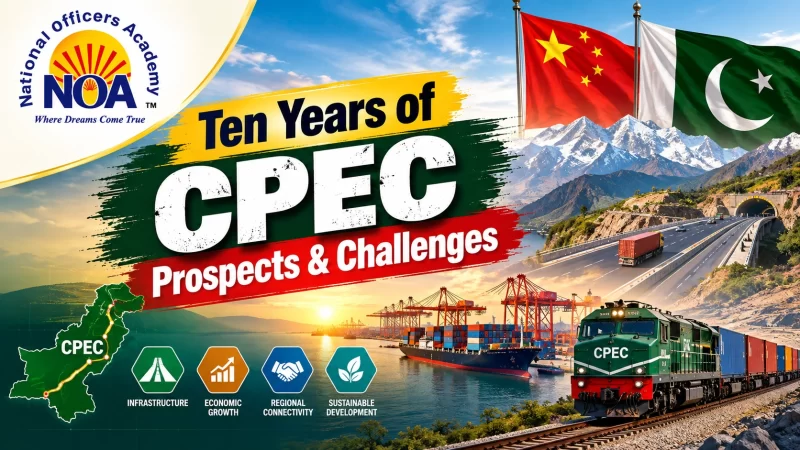
Ten years of the China-Pakistan Economic Corridor have transformed Pakistan-China economic cooperation through major investments in energy, infrastructure and connectivity. This article examines CPEC’s achievements, Phase II prospects, socio-economic potential and the challenges that will shape its future.Read More




Recent Comments