The Taiwan Strait has emerged as one of the most sensitive flashpoints in US-China relations. This article examines Taiwan’s disputed political status, Beijing’s One-China principle, the 1992 Consensus, Taiwan’s international position, Washington’s strategic ambiguity, growing US-Taiwan ties and the risk of military confrontation across the Strait.Read More
Montesquieu’s doctrine of separation of powers divides state authority among the legislature, executive and judiciary to prevent concentration of power. This article examines the doctrine in the United States and Pakistan, judicial review, institutional overlap, the influence of bureaucracy, media and advisory bodies, and the need for clearer constitutional boundaries among state organs.Read More
Civil-military relations are a key indicator of democratic quality and institutional balance. This article applies the ideas of Samuel Huntington and Morris Janowitz to Pakistan, examines the country’s colonial legacy and causes of military intervention, and discusses lessons from Turkey for strengthening civilian supremacy and democratic governance.Read More
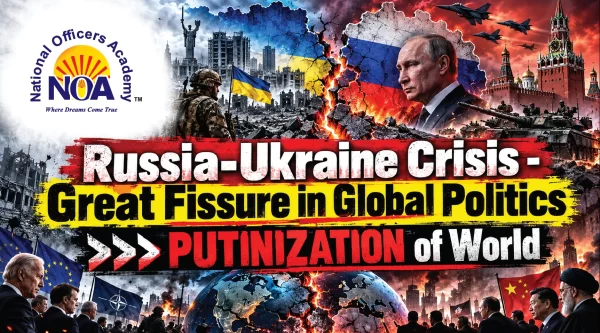
The Russia-Ukraine war has become a major geopolitical rupture, reshaping NATO-Russia relations, accelerating great-power competition, disrupting energy and food markets, and intensifying inflation worldwide. This article examines the historical context of the conflict, its strategic and economic consequences, and its implications for Pakistan’s foreign, energy and economic security.Read More