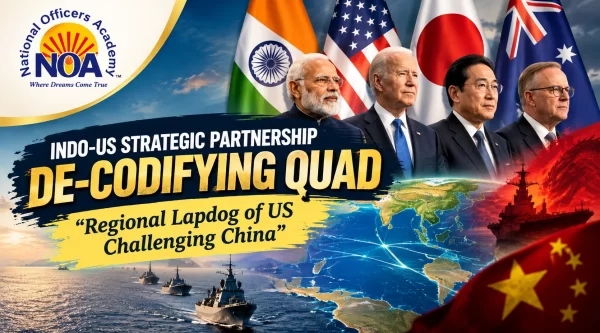
The Indo-US strategic partnership has expanded significantly through defence agreements, military exercises and the Quadrilateral Security Dialogue. This article examines the evolution of the partnership, QUAD’s role in the Indo-Pacific, its connection with wider US-China competition, and the strategic implications for Pakistan.Read More
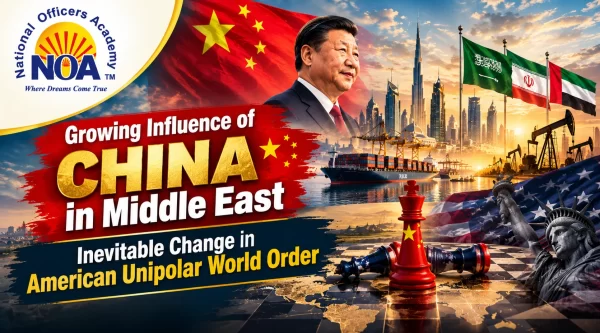
China’s expanding economic, diplomatic and strategic engagement with the Middle East is gradually altering the region’s geopolitical landscape. From massive trade and infrastructure investments to strategic partnerships and mediation between Saudi Arabia and Iran, Beijing has emerged as an increasingly important regional actor.Read More
China’s growing trade, investment, infrastructure projects and diplomatic engagement are reshaping the Middle East. Explore Beijing’s relations with Saudi Arabia, Iran, the UAE, Iraq, Syria and Egypt, and what its rise means for American influence and the emerging multipolar world order.Read More
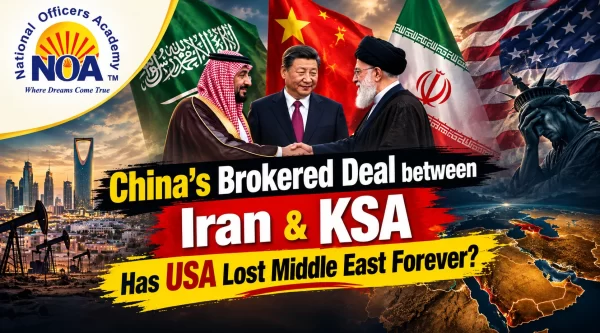
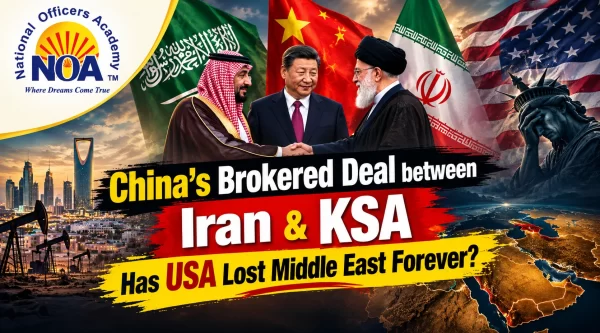
China’s mediation between Iran and Saudi Arabia marked an important shift in Middle Eastern diplomacy. Explore the deal, its regional implications, China’s growing influence and what it means for the future role of the United States in the Middle East.Read More
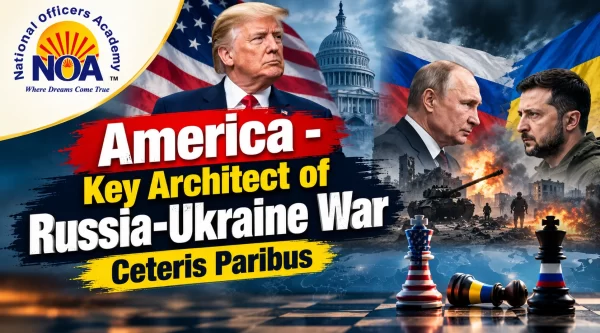
The United States has played a major role in the international response to Russia’s invasion of Ukraine through military assistance, economic sanctions, diplomatic backing and an expanded NATO posture in Europe. This article examines the scale and strategic rationale of American involvement in the conflict.Read More