Pakistan’s political polarization has deepened divisions across society, institutions and the economy. This article examines elite confrontation, constitutional crises, misinformation, institutional tensions and the wider costs for national integration, governance, economic stability and Pakistan’s international standing.Read More
Political and economic instability has slowed Pakistan’s ability to fully realise CPEC’s potential, particularly its second phase focused on industrialisation, Special Economic Zones, agriculture and technology. The article examines how policy inconsistency, security risks, bureaucratic hurdles, weak investor confidence and political uncertainty affect CPEC and Pakistan-China relations.Read More
Climate change has emerged as a serious threat to Pakistan through extreme heat, floods, glacial melt, water scarcity and agricultural disruption. The article critically examines Pakistan’s climate vulnerability, national initiatives such as the National Climate Change Policy and Ten Billion Tree Tsunami, and its diplomatic role at COP26 and COP27.Read More
Pakistan’s 2022 floods exposed the country’s deep climate vulnerability and serious gaps in disaster preparedness, urban planning, institutional coordination and financing. This article examines the scale of the disaster, Pakistan’s climate risks, shortcomings in national response mechanisms and a comprehensive framework for strengthening resilience.Read More
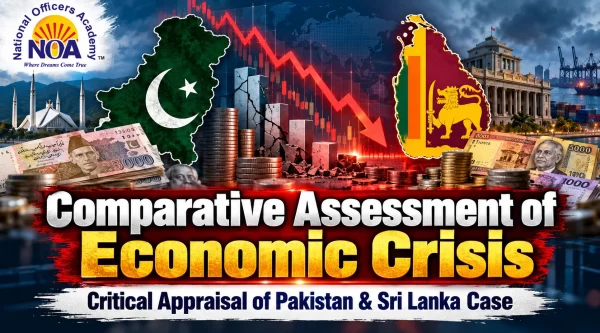
Pakistan and Sri Lanka have faced several overlapping economic pressures, including external debt, declining foreign-exchange reserves, currency depreciation, high inflation, balance-of-payments difficulties, political instability and the effects of COVID-19 and global commodity shocks. This comparative assessment examines the similarities, differences and policy lessons Pakistan can draw from Sri Lanka’s crisis.Read More